





Outcrops of Manhattan schist scattered through the park, climbed close to the ground without ropes. Free, no permit, and a dedicated following most visitors walk straight past — here’s where to start and what to bring.
Main boulders
permit needed
Short problems
Best conditions
Nothing to book, nothing to pay and no permit involved. The rocks are public, they’re open whenever the park is, and anyone can walk up and get on them.
The catch is that nothing is set up for you either. There are no mats under the rock, no staff, and no grades painted on the holds. Bouldering means climbing without ropes at a height where falling is part of it — which makes a crash pad and someone to spot you the difference between a good afternoon and a bad landing. The other half of it is the rock itself: Manhattan schist is polished slick by a century and a half of hands and boots, and after rain it is genuinely not worth touching.
The climbing clusters on three outcrops. They’re not interchangeable — the difficulty, the crowd and how far you’ll walk are different at each.
Known to everyone as Rat Rock, sitting beside the Heckscher Ballfields at the south end. The obvious place to start — low, wide, plenty of easy lines, and usually a few regulars who will happily point you at a problem that suits you.
Where
Conditions
A few minutes from Rat Rock, close to Wollman Rink. More varied ground than the south’s starter rock, with problems across a real spread of difficulty — the natural second stop once the easy lines stop feeling hard.
Where
Conditions
Up around 110th Street at the top of the park, and far more secluded than either southern rock. Demanding problems and considerably fewer people — which cuts both ways when there is nobody around to spot you.
Where
Conditions
Every worthwhile outcrop in the park. Filled for beginner-friendly problems, hollow for harder ones.
Three different answers depending on how much climbing you’ve done. Pick the one that matches you honestly rather than optimistically.
Choose the closest match.
Beside the Heckscher Ballfields at the south end, and the friendliest rock in the park. Low, wide, plenty of easy lines and usually a handful of regulars who will show a newcomer where to put their feet. Borrow nothing — there is no hire here — but do ask. Find it on the full park map before you set out.
A few minutes from Rat Rock, beside Wollman Rink, with far more varied terrain and a genuine spread of difficulty. It is the right step up from gym climbing: the holds are polished, nothing is colour-coded, and reading the sequence is most of the work. Bring a pad — the landings are less forgiving than at Rat Rock.
Around 110th Street at the top of the park, secluded and demanding, and the one that will actually give you a project. The trade-off is that it is often empty — which is pleasant right up until you want a spotter. Take someone with you, take a pad, and don’t climb it alone on damp rock.

Nothing is laid out under these rocks. A pad is the one piece of equipment that changes what happens when you come off, and every regular you see here has carried one in. Landing zones around the boulders are uneven, so position it before you start rather than after.

A spotter isn’t there to catch you — they’re there to steer your fall onto the pad and keep your head off the rock. It is the single biggest safety difference between climbing here and climbing in a gym, and it costs nothing but a friend.

Manhattan schist is polished slick by a hundred and fifty years of traffic and it holds damp in the shade long after the paths have dried. Give it a full day after rain. Wet holds are not a harder version of the same problem — they simply don’t work.

Brush your chalk off the holds when you’re done, take your tape and your rubbish with you, and never chip or alter a hold. These are public outcrops in a landmarked park and their condition is the only reason climbing here is still tolerated.
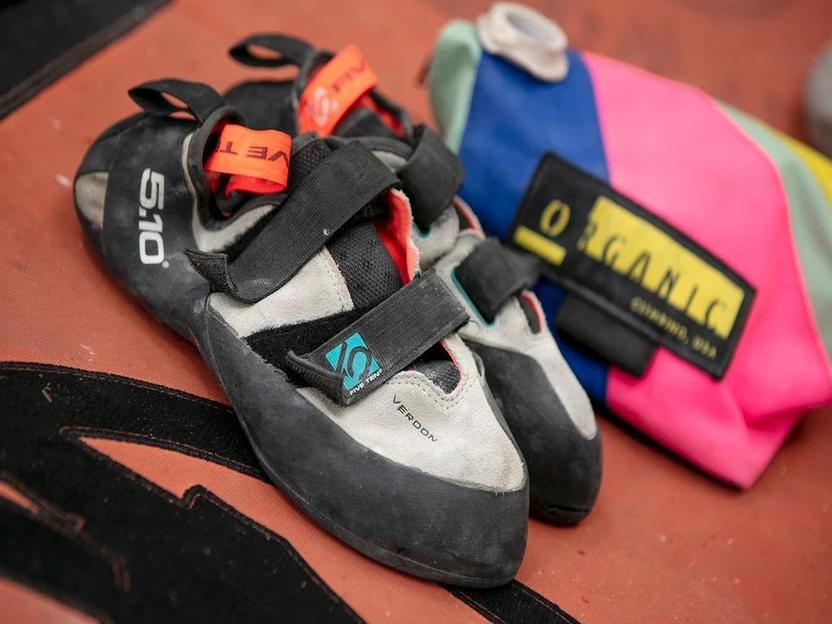
Not much, and none of it is available in the park — there is no hire, no shop and nowhere to borrow a pad. Sort your kit before you cross town, because a wasted trip here is entirely avoidable.
Difficulty, location and who each one suits. Worth deciding before you carry a pad across the park.
Wet schist is not a harder problem — it’s an impossible one. The rock here has been polished smooth by a century and a half of use, and it holds damp in the shade long after the paths look dry. Give it a full day after rain, and if a hold feels greasy on the first move, walk away rather than committing to it.
No. The outcrops are public, free and open whenever the park is. Nothing to book and nobody to sign in with — which also means nobody is checking whether you know what you’re doing.
None to start. Umpire Rock has low, easy lines that a complete beginner can get on, and the regulars there are unusually willing to point newcomers at something suitable. What you do need is a pad, a spotter and the sense to climb down rather than jump.
The name for a single climbing challenge — one particular sequence of moves up one particular bit of rock. Problems demand physical strength and a fair amount of mental strategy, since working out the order of the moves is most of the difficulty. Climbers often add their own restrictions, like banning a hold, to make a problem harder.
Nothing at all. The only money involved is your own kit, and none of it can be hired in the park.
Umpire Rock, known as Rat Rock, beside the Heckscher Ballfields at the south end of the park. It has the easiest lines and the most people around, which matters more than it sounds when you’re learning.
Bouldering is climbing at a height where falling is expected rather than avoided, and it is managed with a crash pad and a spotter rather than a rope. Done that way it’s a reasonable risk; done alone, on wet rock, with no pad, it isn’t. Climb down rather than jump, and know that ankles are what people hurt here.
Cool and dry. Autumn and early spring are the best of the year — friction is better in the cold and your hands stay drier. Avoid anything within a day of rain, and avoid high summer, when sweaty hands and polished schist make even easy problems feel unreasonable.
In practice climbing happens on these three outcrops. Central Park is a landmarked landscape and much of its rock sits inside planted or restored areas that shouldn’t be scrambled on at all. Stick to the established boulders, keep off vegetation, and leave no trace on the rock.
The Skate Circle · free clinics for beginners
The Ramble & North Woods · free
Heckscher, beside Rat Rock · permit
Tell us how much climbing you’ve done and whether you’re bringing a pad. We’ll tell you which outcrop to walk to and what the ground under it is like.